- Jun 26, 2026
- Trainings
- 277
Share this post on:
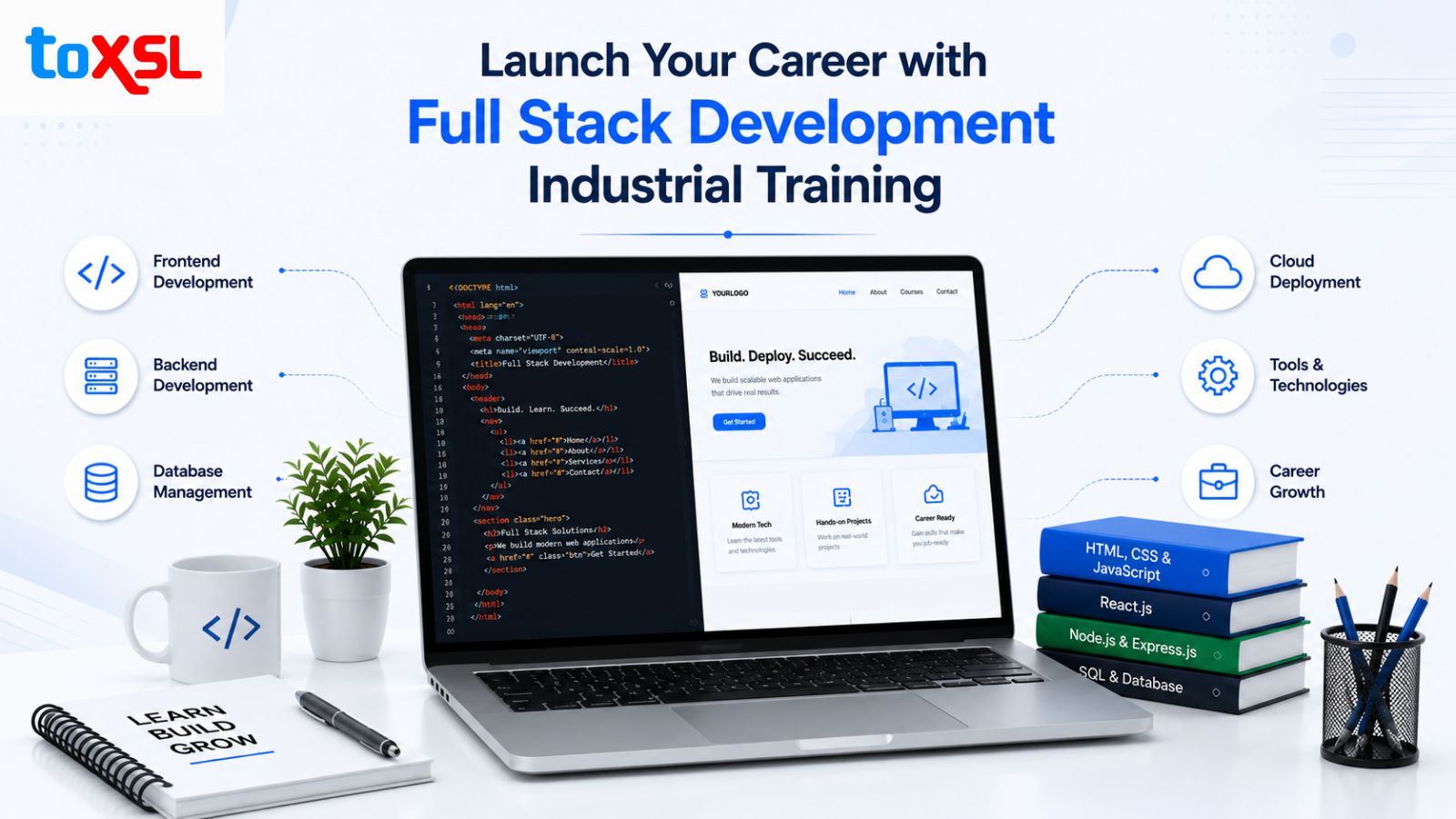
The demand for skilled full stack developers continues to grow as businesses increasingly rely on web and mobile applications to support digital transformation initiatives. Organizations seek professionals who can manage both front-end and back-end development, making full stack development one of the most valuable and versatile career paths in the technology sector.
While theoretical knowledge provides a strong foundation, employers prioritize candidates who can apply their skills to real-world projects. This is where Full Stack Development Industrial Training in Mohali becomes highly valuable. It bridges the gap between academic learning and industry expectations by exposing students and aspiring developers to practical development environments, collaborative workflows, modern tools, and real business challenges.
Industrial training helps learners gain hands-on experience in designing user interfaces, developing server-side applications, managing databases, integrating APIs, testing applications, and deploying solutions. Through project-based learning, trainees build technical confidence and develop the competencies required to succeed in professional software development roles.
Whether you are a student, recent graduate, or aspiring developer, comprehensive industrial training can accelerate your journey toward becoming a job-ready full stack professional.
Key Takeaways
- Full stack development training provides practical exposure to both front-end and back-end technologies.
- Real-world project experience significantly improves employability and technical confidence.
- Industrial training helps learners understand development workflows used by modern software companies.
- Hands-on experience with databases, APIs, deployment tools, and testing frameworks creates job-ready skills.
- Professional mentorship and project-based learning prepare students for diverse career opportunities in software development.
Benefits of Full Stack Development Industrial Training
Full Stack Development Industrial Training equips learners with practical knowledge, technical expertise, and industry exposure that go beyond classroom education. It enables students to work with modern development tools, understand professional workflows, and build real-world applications. The following benefits highlight how industrial training in Mohali prepares aspiring developers for successful careers in the software industry.
Practical Industry Exposure
Industrial training provides hands-on experience by allowing learners to participate in real-world development projects. Instead of working only on theoretical assignments, trainees gain practical knowledge of how software products are designed, developed, tested, and maintained in professional environments.
- Work on live projects that simulate real business requirements.
- Understand the complete software development lifecycle.
- Learn professional coding standards and development practices.
- Gain confidence by solving practical development challenges.
Comprehensive Technical Skill Development
A structured industrial training program covers both front-end and back-end technologies, helping learners develop a well-rounded technical skill set. Participants become familiar with modern programming languages, frameworks, databases, and deployment techniques used across the software industry.
- Build expertise in front-end and back-end development.
- Learn database management and API integration.
- Gain experience with cloud platforms and deployment tools.
- Develop versatile skills that support multiple career opportunities.
Enhanced Problem-Solving Abilities
Real-world software projects expose trainees to technical challenges that require logical thinking and effective troubleshooting. By resolving practical issues during development, learners strengthen their analytical abilities and become more confident developers.
- Improve debugging and troubleshooting skills.
- Develop logical and analytical thinking.
- Learn to optimize application performance.
- Build confidence in solving real development challenges.
Improved Career Readiness
Industrial training helps students become job-ready by combining technical learning with practical experience. Employers often prefer candidates who have worked on real projects and understand professional development processes.
- Build an impressive portfolio with live projects.
- Strengthen your resume with practical experience.
- Prepare for technical interviews with confidence.
- Develop skills that align with current industry expectations.
Understanding Team Collaboration
Modern software development relies heavily on teamwork and collaboration. Industrial training familiarizes learners with collaborative workflows and communication practices followed by software development teams.
- Learn Agile and Scrum development methodologies.
- Collaborate using version control systems like Git and GitHub.
- Participate in code reviews and team discussions.
- Improve communication and teamwork skills.
Exposure to Industry Tools
Professional software development requires familiarity with various tools that improve productivity and streamline workflows. Industrial training in Chandigarh and Mohali introduces learners to the technologies and platforms commonly used in the IT industry.
- Gain hands-on experience with Git and GitHub.
- Learn project management and collaboration tools.
- Work with testing frameworks and debugging utilities.
- Understand CI/CD pipelines and cloud deployment platforms.
Better Employment Opportunities
Completing quality Industrial training in Mohali significantly enhances employability by demonstrating practical experience and technical competence. Employers value candidates who can contribute to projects from day one.
- Increase job opportunities in software development.
- Meet employer expectations with practical experience.
- Showcase real-world projects during interviews.
- Improve career prospects across multiple technology domains.
Essential Skills Developed Through Full Stack Development Industrial Training
Full stack development requires a combination of technical expertise, practical implementation capabilities, and problem-solving skills. Industrial training helps learners master these competencies through project-based learning and professional mentorship.
Front-End Development Expertise
Front-end development focuses on creating engaging and responsive user experiences. Through hands-on practice, trainees learn how to build visually appealing interfaces while ensuring usability, accessibility, and performance across multiple devices and platforms.
HTML and Semantic Web Development
Learners gain expertise in structuring web applications using semantic HTML elements. They understand how proper markup improves accessibility, search engine visibility, and overall maintainability while forming the foundation of modern web applications.
CSS and Responsive Design
Training emphasizes responsive design principles that ensure websites function effectively on desktops, tablets, and smartphones. Participants learn advanced styling techniques, layouts, animations, and responsive frameworks used in professional development environments.
JavaScript Fundamentals
Students develop strong JavaScript skills, including event handling, asynchronous programming, DOM manipulation, and modern ES6+ features. These capabilities enable the creation of dynamic and interactive web applications.
Modern Front-End Framework Integration
Industrial training introduces learners to modern frameworks and libraries that streamline application development. Participants gain practical experience in building scalable, component-based user interfaces for business applications.
User Experience and Performance Optimization
Trainees learn techniques for improving application speed, responsiveness, and user engagement. Understanding performance optimization helps create applications that deliver seamless experiences across different environments.
Database Management and Optimization
Students work with relational and non-relational databases, learning data modeling, querying techniques, indexing strategies, and optimization practices essential for high-performance applications.
Authentication and Security Implementation
Industrial projects expose learners to authentication mechanisms, authorization frameworks, encryption techniques, and security best practices required for protecting sensitive user information.
Deployment and Maintenance Practices
Participants learn deployment procedures, server configuration, monitoring practices, and maintenance strategies that ensure applications remain stable, secure, and available to users.
Career Paths After Full Stack Development Industrial Training
The growing digital economy has created extensive opportunities for professionals with full stack development expertise. Practical training helps learners qualify for diverse technology roles across industries.
Full Stack Developer
Full stack developers manage both client-side and server-side development responsibilities while building complete applications.
Key Responsibilities:
- Develop front-end and back-end components
- Integrate databases and APIs
- Optimize application performance
- Collaborate with cross-functional teams
Front-End Developer
Front-end developers specialize in creating engaging user experiences and responsive interfaces for websites and applications.
Key Responsibilities:
- Design responsive interfaces
- Implement interactive features
- Improve user experience
- Optimize application performance
Back-End Developer
Back-end developers focus on server-side logic, databases, security, and application functionality.
Key Responsibilities:
- Build server-side applications
- Manage databases
- Develop APIs
- Implement security protocols
Web Application Developer
Professionals in this role create scalable web-based solutions that address business challenges and improve customer experiences.
Key Responsibilities:
- Build business applications
- Integrate third-party services
- Develop enterprise solutions
- Maintain application performance
Software Engineer
Software engineers utilize development expertise to design, develop, and optimize complex software systems.
Key Responsibilities:
- Develop software architectures
- Solve technical challenges
- Improve system efficiency
- Ensure application reliability
DevOps Associate
DevOps professionals support deployment, monitoring, automation, and infrastructure management activities.
Key Responsibilities:
- Manage deployment pipelines
- Automate workflows
- Monitor application health
- Improve operational efficiency
Technical Consultant
Technical consultants assist organizations in selecting technologies and implementing software solutions.
Key Responsibilities:
- Analyze business requirements
- Recommend technical solutions
- Support implementation projects
- Provide technical guidance
Why Choose ToXSL Technologies for Full Stack Development Industrial Training?
Choosing the right training company is an important step toward building a successful career in software development. At ToXSL Technologies, we focus on industry-oriented learning that combines technical knowledge with practical experience. Our industrial training programs are designed to help students develop job-ready skills, gain confidence, and prepare for real-world software development careers.
Industry-Oriented Curriculum
Our Full Stack Development Industrial Training program is designed according to current industry standards. Students learn modern front-end and back-end technologies, databases, APIs, version control, and deployment practices that align with the skills employers actively seek.
Hands-On Live Project Experience
We emphasize practical learning by involving trainees in live projects that simulate real business scenarios. This hands-on approach helps students understand complete development workflows while building a professional portfolio that showcases their technical capabilities.
Guidance from Experienced Industry Professionals
Students receive mentorship from experienced developers who share practical insights, coding best practices, and industry knowledge. Regular feedback sessions and technical guidance help learners strengthen their programming skills and improve problem-solving abilities.
Modern Development Tools and Technologies
Our training includes exposure to professional tools such as Git, GitHub, project management platforms, testing frameworks, cloud services, and deployment environments. Learning these technologies prepares students to work confidently in professional software development teams.
Career Support and Professional Development
Beyond technical training, ToXSL Technologies helps students prepare for successful careers through resume-building assistance, interview preparation, communication skill development, and career guidance, enabling them to confidently pursue opportunities in the competitive IT industry.
Conclusion
Full stack development has emerged as one of the most promising career paths in the technology industry. However, theoretical knowledge alone is rarely enough to meet professional expectations. Practical exposure, project implementation experience, and industry-oriented learning are essential for becoming a competent and confident developer.
At ToXSL Technologies, Full Stack Development Industrial Training is designed to help learners acquire job-ready skills through hands-on development experience, real-world projects, mentorship, and exposure to modern technologies. By focusing on practical learning and professional development practices, trainees gain the confidence and expertise needed to thrive in today's competitive software industry.
Whether your goal is to become a full stack developer, software engineer, web application developer, or technology consultant, industrial training can provide the foundation required to achieve long-term career success.
Frequently Asked Questions
1. What is Full Stack Development Industrial Training?
Full Stack Development Industrial Training is a practical learning program that provides hands-on experience in front-end development, back-end programming, databases, APIs, deployment processes, and professional development practices.
2. What programming languages and technologies are typically covered during Full Stack Development Industrial Training?
A comprehensive training program introduces learners to the technologies required to build complete web applications. Students gain practical experience with both front-end and back-end development tools.
- Learn HTML, CSS, JavaScript, and responsive web design.
- Work with modern front-end frameworks such as React or Angular.
- Build server-side applications using technologies like Node.js or PHP.
- Manage databases, APIs, version control, and deployment platforms.
3. How does Full Stack Development Industrial Training prepare students for technical interviews?
Industrial training exposes students to practical coding challenges and real development environments, making technical interviews less intimidating. Learners gain confidence through continuous practice and professional guidance.
- Practice coding and logical problem-solving exercises.
- Prepare for technical and HR interview rounds.
- Learn to explain projects and technical concepts confidently.
- Strengthen resume and portfolio presentation skills.
4. How does Full Stack Development Industrial Training help students become job-ready?
Industrial training bridges the gap between academic education and industry requirements by combining practical experience, technical knowledge, and professional development into one comprehensive learning program.
- Gain practical experience through live projects.
- Build confidence with real-world application development.
- Learn industry-standard tools and technologies.
- Develop skills that employers actively value.
5. Can industrial training help build a professional portfolio?
Yes, industrial training plays a crucial role in building a strong professional portfolio by giving learners the opportunity to work on practical projects that showcase their technical expertise. A well-developed portfolio demonstrates your skills to recruiters and increases your chances of securing software development roles.
- Build real-world web and application development projects.
- Showcase your coding, debugging, and problem-solving abilities.
- Demonstrate proficiency in front-end, back-end, and database technologies.
- Create a portfolio that strengthens your resume and impresses potential employers