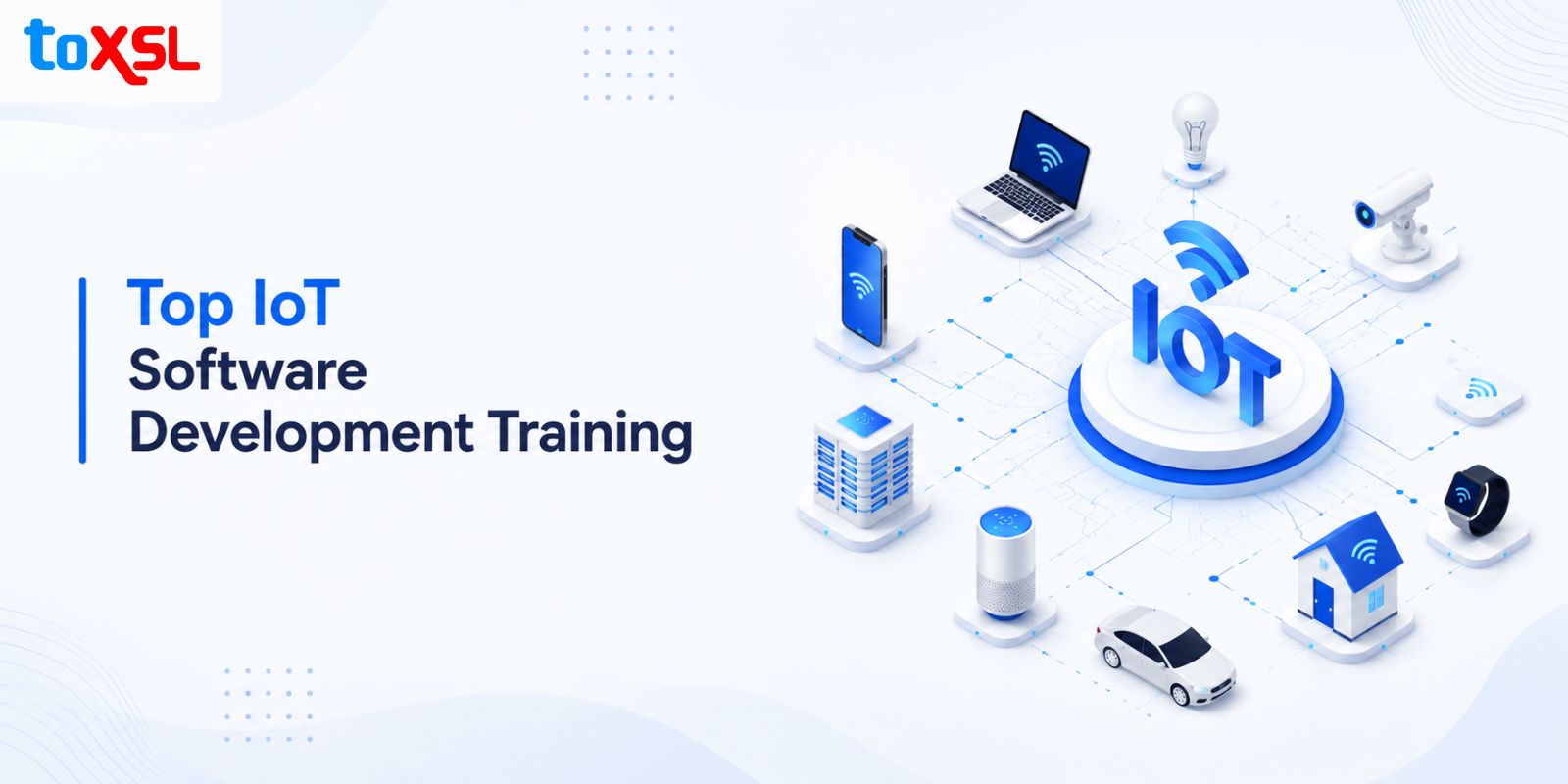
Are you a student looking for IoT Software Development Industrial Training to build practical skills and prepare for a successful technology career? With the rapid growth of connected devices, smart systems, and digital transformation initiatives, the Internet of Things (IoT) has become one of the most in-demand technology domains across industries. Companies are actively seeking professionals who can develop innovative IoT applications, integrate smart devices, and create scalable software solutions that power connected ecosystems.
However, building a career in IoT requires more than just theoretical knowledge. Employers increasingly prefer candidates who have hands-on experience working with real-world projects, modern development tools, and industry-standard technologies. This is where industry-oriented IoT software development industrial training becomes essential. It helps students bridge the gap between academic learning and practical implementation by providing exposure to live projects, development environments, and professional workflows.
Key Takeaways
- Industries worldwide are adopting connected technologies, creating strong demand for IoT professionals.
- Hands-on project work helps students understand real-world software development processes.
- IoT development combines software programming, cloud computing, mobile apps, databases, and web technologies.
- Practical exposure helps students become job-ready and industry-ready.
- IoT professionals can work in software development, automation, cloud computing, and smart technology sectors.
- Smart cities, healthcare systems, manufacturing automation, and connected devices rely heavily on IoT innovations.
Understanding IoT Software Development Training
IoT software development training in Mohali focuses on creating software solutions that connect devices, sensors, cloud platforms, and end users. Unlike traditional software development, IoT systems involve communication between physical devices and digital applications.
The training introduces students to the architecture and functionality of connected ecosystems. Learners understand how devices collect information, transmit data securely, process information through cloud services, and present meaningful insights through web or mobile applications. A comprehensive industrial training program helps students understand:
- Device connectivity
- Software application development
- Cloud integration
- Data processing
- API development
- Security implementation
- Real-time monitoring systems
The primary goal is to provide practical knowledge that aligns with current industry requirements.
Why IoT Skills Are in High Demand
The global adoption of connected technologies has accelerated significantly over the past decade. Businesses are investing heavily in digital transformation initiatives that rely on IoT solutions to improve efficiency, automate operations, and enhance customer experiences. Here are the several factors that contribute to the increasing demand for IoT professionals:
- Digital Transformation: Organizations across industries are integrating smart technologies into their operations to remain competitive and improve productivity.
- Industrial Automation: Manufacturing facilities use IoT systems to monitor equipment, predict maintenance requirements, and optimize production processes.
- Smart Infrastructure: Governments and municipalities are implementing smart city initiatives that rely on connected technologies for traffic management, public safety, and energy efficiency.
- Healthcare Innovation: Healthcare providers are using connected devices for remote patient monitoring, health tracking, and medical equipment management.
- Growth of Cloud Technologies: Cloud computing has made large-scale IoT deployments more accessible, creating additional opportunities for developers.
Benefits of IoT Software Development Industrial Training
IoT Software Development Industrial Training in Chandigarh and Mohali offers much more than technical knowledge. It provides students with practical experience, industry exposure, and the confidence needed to work on real-world projects. As organizations continue to invest in connected technologies, employers are looking for professionals who can contribute from day one.
1. Gain Hands-On Experience
One of the biggest advantages of IoT industrial training is the opportunity to work on practical projects. Instead of learning only through theory, students get hands-on exposure to developing IoT applications, integrating devices, managing data, and building software solutions.
2. Build Industry-Relevant Technical Skills
The technology industry is constantly evolving, and employers seek candidates who possess up-to-date technical skills. IoT Software Development Industrial Training introduces students to the technologies, tools, and development practices commonly used in modern organizations.
3. IoT Development Lifecycle
Industrial training helps students understand how an IoT project moves from concept to deployment. This includes planning, development, testing, integration, deployment, and maintenance.
4. Improve Problem-Solving Skills
Developing IoT solutions often involves solving complex technical challenges. During training, students encounter real-world scenarios that require critical thinking and analytical problem-solving. These skills are valuable not only in IoT development but throughout a professional career in technology.
5. Work with Modern Tools
Modern software development relies heavily on specialized tools and platforms. Through industrial training, students gain practical exposure to professional development environments and workflows. Working with these technologies improves productivity and prepares students for real workplace environments.
Career Options After IoT Software Development Industrial Training
The increasing adoption of the Internet of Things (IoT) across industries such as healthcare, manufacturing, smart cities, agriculture, retail, logistics, and home automation has created a strong demand for skilled IoT professionals. These skills open doors to a wide range of rewarding career opportunities in the technology sector.
1. IoT Software Developer
An IoT Software Developer is responsible for designing, developing, testing, and maintaining software applications that enable communication between connected devices and users. They work with IoT platforms, APIs, cloud services, and databases to build intelligent applications that collect, process, and analyze data from smart devices.
Key Responsibilities:
- Develop IoT-enabled software applications
- Create device communication protocols
- Integrate sensors and connected devices
- Optimize application performance and security
- Maintain and upgrade IoT systems
2. Web Application Developer
Web Application Developers create interactive dashboards, monitoring systems, and management portals used to control and analyze IoT devices. These professionals develop responsive web applications that allow users to access real-time device information from any browser.
Key Responsibilities:
- Build IoT monitoring dashboards
- Develop web-based control panels
- Create data visualization interfaces
- Integrate cloud-based IoT services
- Ensure seamless user experiences
3. Mobile Application Developer
As mobile devices become the primary control point for smart systems, Mobile Application Developers play a crucial role in the IoT ecosystem. They develop Android and iOS applications that allow users to monitor, manage, and control connected devices remotely.
Key Responsibilities:
- Design and develop mobile IoT applications
- Integrate device communication features
- Create user-friendly interfaces
- Enable real-time notifications and alerts
- Connect apps with cloud platforms and APIs
4. IoT Solution Engineer
IoT Solution Engineers design complete IoT ecosystems by combining hardware, software, networking, and cloud technologies. They work closely with clients and development teams to build customized IoT solutions that address specific business challenges.
Key Responsibilities:
- Design end-to-end IoT architectures
- Integrate sensors, gateways, and cloud platforms
- Analyze business requirements
- Implement scalable IoT solutions
- Ensure system reliability and performance
5. Cloud Application Developer
Most modern IoT systems rely heavily on cloud infrastructure for data storage, processing, and analytics. Cloud Application Developers build and manage cloud-based applications that support large-scale IoT deployments.
Key Responsibilities:
- Develop cloud-native IoT applications
- Manage databases and cloud services
- Implement data processing workflows
- Ensure scalability and security
- Integrate IoT devices with cloud platforms
6. Software Engineer
IoT training also prepares candidates for general software engineering roles. Software Engineers develop enterprise applications, automation solutions, and intelligent systems that incorporate IoT technologies and connected devices.
Key Responsibilities:
- Develop software solutions for businesses
- Build scalable applications
- Implement automation systems
- Collaborate with cross-functional teams
- Maintain software quality and performance
Mohali’s Leading IoT Software Development Industrial Training
When it comes to industry-focused learning, ToXSL Technologies has established itself as a trusted name for technology training and professional skill development. As a leading provider of Industrial Training in Mohali, ToXSL Technologies focuses on practical learning methodologies that prepare students for real-world software development environments. The training programs are designed to provide hands-on experience with modern technologies, live projects, and industry-standard development practices.
Students receive exposure to:
- IoT software development
- Web application development
- Mobile application development
- Cloud integration concepts
- API development
- Database management
- Project deployment workflows
Recognized among providers offering the Best Industrial Training in Chandigarh, ToXSL Technologies emphasizes project-based learning that helps students build confidence and professional expertise.
The combination of experienced mentors, modern development environments, and hands-on project exposure makes ToXSL Technologies a preferred destination for aspiring IoT professionals.
Conclusion
The Internet of Things is shaping the future of technology by connecting devices, applications, and people in ways that improve efficiency, automation, and decision-making. As businesses continue to adopt smart technologies, the demand for skilled IoT software professionals will only continue to grow.
Industry-focused training provides students with the practical knowledge, technical skills, and real-world experience needed to thrive in this evolving field. From programming and cloud computing to web and mobile application development, IoT software development training offers a strong foundation for a successful technology career.
At ToXSL Technologies, we are committed to helping students become industry-ready through practical learning, live projects, and exposure to modern development practices. Whether you are looking for Software Development Training in Mohali, investing in IoT software development training can open the door to exciting career opportunities and long-term professional growth.
Frequently Asked Questions
1. What is IoT software development industrial training?
IoT software development industrial training provides practical exposure to building applications and systems that connect devices, cloud platforms, and users.
Key Points:
- Hands-on learning
- Real-world project exposure
- Industry-relevant skills
2. Who should join IoT software development training?
Students, graduates, and aspiring developers interested in connected technologies and software development can benefit from IoT training.
Key Points:
- Students
- Fresh graduates
- Technology enthusiasts
3. What skills are taught during IoT industrial training?
Students learn programming, cloud computing, web development, mobile application development, database management, API integration, and security concepts.
Key Points:
- Software development
- Cloud technologies
- Application development
4. Why is practical training important in IoT development?
Practical training helps students understand real-world implementation and improves their technical confidence.
Key Points:
- Better learning outcomes
- Industry exposure
- Project experience
5. What career opportunities are available after IoT training?
Career options include IoT Developer, Software Engineer, Cloud Developer, Mobile App Developer, Web Developer, and IoT Solution Engineer.
Key Points:
- Multiple career paths
- High industry demand
- Strong growth opportunities
6. Why choose ToXSL Technologies for IoT industrial training?
ToXSL Technologies provides industry-oriented learning, practical project experience, expert mentorship, and exposure to modern technologies.
Key Points:
- Hands-on learning
- Live projects
- Career-focused training
Related Blogs:
Why Data Science Is the Right Career Path for Aspirants?
Shape Your Future with Mobile App Development Industrial Training
Advanced PHP Training with Live Projects to Boost Your Career