Congratulations on Successfully Completing 3 Months of Flutter Development Industrial Training
At ToXSL Technologies, we are delighted to congratulate our talented trainee on successfully completing 3 months of Flutter Development Industria...
We use cookies, check our Privacy Policies.
Introduction to HR: Understand the role of Human Resource Management and how HR contributes to organizational growth and employee development.
HR Roles & Responsibilities: Learn about key HR responsibilities, including recruitment, employee management, HR operations, employee relations, and employee development.
Employee Lifecycle: Understand the employee journey from workforce planning and recruitment to onboarding, development, retention, and exit.
HR in the Technology Industry: Understand the HR requirements of a technology company, including hiring for technical and non-technical positions.
Professional Ethics & Confidentiality: Learn the importance of HR ethics, confidentiality, responsible handling of employee information, and workplace professionalism.
Workforce Planning: Understand how organizations identify staffing requirements, forecast workforce needs, and plan recruitment according to business objectives.
Job Analysis: Learn how to analyze positions and identify responsibilities, qualifications, experience, skills, and competencies.
Job Description & Job Specification: Learn to prepare job descriptions and specifications that clearly define job responsibilities and candidate requirements.
Recruitment Fundamentals: Learn the recruitment and talent acquisition process and how HR works with hiring managers to fulfill staffing requirements.
Candidate Sourcing: Learn different sourcing methods, including job portals, professional networks, employee referrals, recruitment databases, and other talent sources.
Resume Screening & Shortlisting: Develop practical skills in reviewing resumes, comparing candidate qualifications with job requirements, and shortlisting suitable candidates.
Recruitment Tracking: Understand how recruitment trackers and databases are used to monitor candidates, interview stages, follow-ups, and hiring progress.
Interview Planning: Learn how HR professionals plan and coordinate interviews based on job requirements and candidate availability.
HR & Behavioral Interviews: Understand HR interviews, behavioral interviews, competency-based questions, and candidate assessment methods.
Technical Interview Coordination: Learn how HR coordinates with technical teams and hiring managers to schedule and manage technical interview rounds.
Candidate Selection & Communication: Learn candidate selection, offer communication, follow-ups, and maintaining professional candidate relationships.
Practical Learning: Trainees will work on job descriptions, candidate requirement checklists, recruitment planning, resume screening, candidate shortlisting, recruitment tracking, mock interviews, interview evaluations, and candidate communication.
Employee Onboarding: Understand pre-joining communication, joining formalities, documentation, induction, orientation, probation, and onboarding follow-up.
Onboarding Documentation: Learn how to prepare and maintain onboarding checklists and ensure required employee documents are completed accurately.
HR Operations: Understand the day-to-day operational responsibilities of HR and how HR provides ongoing support to employees and management.
Employee Records Management: Learn how employee records and HR documentation are created, organized, updated, and maintained confidentially.
Attendance Management: Understand attendance tracking, attendance records, regularization, and the importance of accurate attendance information.
Leave Management: Learn the process of leave requests, approvals, leave records, and maintaining accurate employee leave information.
HR Documentation: Develop practical knowledge of maintaining employee files, HR forms, trackers, and other HR-related documents.
HRMS Systems: Understand the purpose of Human Resource Management Systems and how they are used to manage employee information and HR processes.
Probation Management: Learn how probation periods are tracked and how HR coordinates probation reviews and employee confirmations.
Basic Payroll Coordination: Understand the HR role in basic payroll coordination, including attendance, leave information, employee data, and coordination with payroll teams.
Employee Data Management: Learn how accurate and updated employee information is maintained and used for HR operations and reporting.
Employee Engagement: Understand employee engagement, satisfaction, motivation, recognition, workplace culture, and employee experience.
Employee Communication & Feedback: Learn how HR communicates with employees, collects feedback, identifies concerns, and supports a positive workplace environment.
Employee Recognition & Activities: Understand how recognition programs, team activities, and engagement initiatives contribute to employee motivation and workplace culture.
Employee Relations: Learn the fundamentals of managing workplace relationships and supporting employees and managers in resolving workplace concerns.
Practical Learning: Trainees will work on employee records, HR trackers, attendance and leave records, onboarding checklists, HR documentation, employee feedback forms, engagement initiatives, workplace communication exercises, and basic HR operations.
Performance Management: Understand the performance management cycle and the role of HR in supporting employees and managers.
Goal Setting: Learn how employee goals are established and aligned with individual responsibilities, team objectives, and organizational priorities.
KPIs & KRAs: Understand Key Performance Indicators and Key Result Areas and how they are used to measure employee performance.
Performance Reviews & Appraisal: Learn how periodic performance reviews and appraisals are conducted, documented, and communicated to employees.
Employee Feedback & Performance Improvement: Learn how HR manages constructive feedback, recognition, and performance improvement requirements.
Employee Relations & Grievance Handling: Understand how employee grievances are received, documented, reviewed, and handled professionally.
Workplace Conflict Management: Learn how HR supports the resolution of workplace conflicts, communication issues, behavioral concerns, and interpersonal challenges.
Learning & Development: Understand the role of Learning and Development in improving employee skills, performance, productivity, and career growth.
Training Needs Analysis: Learn how organizations identify training requirements based on performance reviews, manager feedback, employee feedback, skill gaps, and business objectives.
Training Planning & Coordination: Understand how HR prepares training plans and coordinates training sessions, participants, trainers, schedules, and documentation.
Employee Retention: Understand employee retention strategies and the factors that influence employees' decisions to remain with an organization.
Employee Turnover & Attrition: Learn about employee turnover and attrition, their common causes, and how HR can analyze workforce trends.
Resignation & Exit Management: Understand resignation processes, notice periods, exit formalities, documentation, knowledge transfer, and employee exit coordination.
Exit Interviews: Learn how exit interviews are conducted to collect employee feedback and identify opportunities to improve employee experience and retention.
HR Analytics & Metrics: Understand how HR uses employee and workforce data to support decision-making and improve HR processes.
HR Reporting: Learn basic HR metrics including headcount, attrition, absenteeism, recruitment activity, employee engagement, and workforce reporting.
Basic HR Dashboards: Understand the fundamentals of creating basic HR dashboards using spreadsheets and presenting workforce information and key HR metrics.
Professional HR Communication: Develop professional communication skills required for candidate communication, employee communication, manager coordination, and workplace interactions.
Business Email Writing: Learn how to write clear, professional, and appropriate business emails for common HR situations.
Workplace Etiquette & Professionalism: Understand corporate etiquette, professional behavior, workplace communication, punctuality, coordination, confidentiality, and appropriate conduct.
Talent Management: Understand talent pipelines, candidate experience, employer branding, recruitment strategy, and employee development.
Practical Learning: Trainees will work on KPI/KRA frameworks, performance review forms, employee grievance cases, training needs assessments, training plans, retention strategies, exit interview questionnaires, HR reports, basic dashboards, professional communication exercises, and talent-pipeline activities.
Recruitment & Talent Acquisition: Trainees will be able to support recruitment activities, candidate sourcing, resume screening, candidate shortlisting, interview coordination, candidate evaluation, and selection processes.
Employee Onboarding: Trainees will understand pre-joining communication, joining formalities, employee documentation, induction, orientation, and onboarding activities.
HR Operations: Trainees will develop practical knowledge of employee records, attendance, leave management, HR documentation, HRMS systems, probation tracking, and basic payroll coordination.
Employee Engagement: Trainees will understand employee satisfaction, motivation, recognition, workplace culture, employee feedback, and engagement initiatives.
Performance Management: Trainees will gain knowledge of goal setting, KPIs, KRAs, performance reviews, appraisals, employee feedback, recognition, and performance improvement.
Employee Relations: Trainees will learn how to handle workplace concerns, grievances, conflicts, communication issues, and employee relations matters professionally and confidentially.
Learning & Development: Trainees will understand training needs analysis, skill-gap identification, training planning, training coordination, training effectiveness, and career development.
Employee Retention & Exit Management: Trainees will understand attrition, turnover, retention strategies, resignation processes, exit interviews, and employee exit documentation.
HR Analytics & Reporting: Trainees will develop basic skills in HR metrics, headcount analysis, attrition analysis, recruitment metrics, absenteeism, engagement metrics, HR reporting, and basic dashboards.
Professional & Corporate Skills: The program will develop professional communication, business email writing, documentation, coordination, problem-solving, confidentiality, teamwork, time management, workplace etiquette, and corporate professionalism.
Placement Opportunity: Top-performing trainees may be considered for employment opportunities at TOXSL Technologies based on their performance, skills, organizational requirements, and available positions.
Real-World Industry Exposure: Gain practical exposure to HR processes and activities within a professional technology company.
Hands-On Practical Experience: Work on practical assignments, recruitment activities, HR documentation, workplace scenarios, case studies, communication exercises, and reporting activities.
Industry Professional Guidance: Learn through practical insights and guidance from experienced professionals and understand workplace expectations.
Corporate & Career Readiness: Build the communication, coordination, documentation, problem-solving, teamwork, and professional skills required to build a successful career in Human Resources.

C-127, 2nd Floor, Phase 8, Industrial Area Mohali Punjab 160071






Gain valuable skills while earning a handsome stipend. Transform your learning experience into tangible financial rewards!

We have special scholarships for meritorious students on our training programs. Invest in your future without breaking the bank!

Dive deep into our 8-hours extensive training sessions. Master essential skills and knowledge in a single, focused industry experience!

We offer in-house placement options for well-deserving candidates who have the zeal to learn and grow in the development sector.

We have numerous sets of 3 months and 6 months industrial training programs under which the candidates can enroll for the most suitable ones.

Trainees often work under the guidance of experienced professionals who provide mentorship and share their industry insights.

IT companies often work with cutting-edge technologies. Trainees get exposure to these technologies, tools, and frameworks that are currently in demand in the industry.

Trainees are usually assigned to projects where they apply their skills to solve real problems. This project-based learning approach enhances their problem-solving abilities and project management skills.

Trainees receive feedback on their performance and progress throughout the training period. This helps them identify areas for improvement and grow professionally.
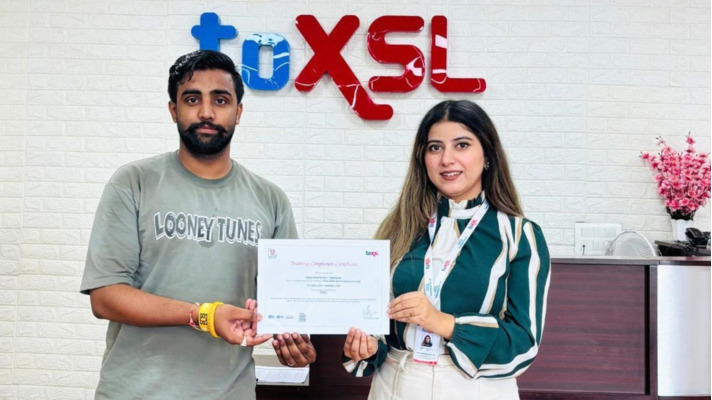
At ToXSL Technologies, we are delighted to congratulate our talented trainee on successfully completing 3 months of Flutter Development Industria...

The mobile app industry is evolving rapidly, creating exciting opportunities for students and aspiring developers who want to build a career in technology. Businesses across industries are investing in mobile applications to improve customer engagement, simplify operations, and deliver digital se...
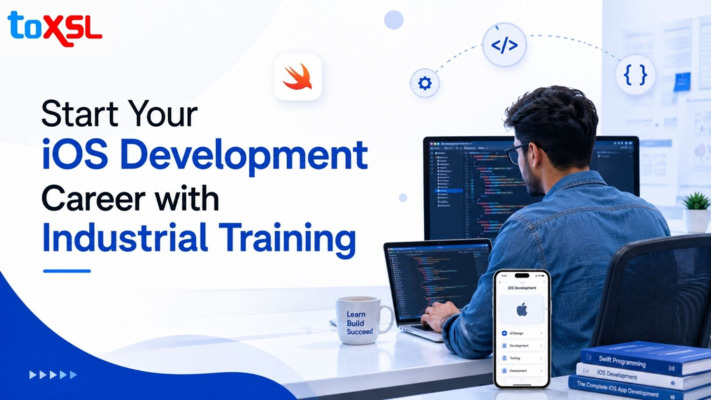
The demand for skilled mobile app developers continues to grow as businesses increasingly depend on mobile applications to engage customers, streamline operations, and deliver digital services. iOS development is a particularly valuable career path for students interested in building applications...