Congratulations on Successfully Completing 3 Months of Flutter Development Industrial Training
At ToXSL Technologies, we are delighted to congratulate our talented trainee on successfully completing 3 months of Flutter Development Industria...
We use cookies, check our Privacy Policies.
The Human Resource Management – 45 Days Practical Training Program by TOXSL Technologies is a comprehensive, industry-oriented training program designed to provide trainees with both theoretical knowledge and practical exposure to the core functions of Human Resources.
Human Resources plays a critical role in every organization. HR professionals are responsible not only for hiring employees but also for creating a productive workplace, supporting employees throughout their journey within the organization, managing performance, developing talent, maintaining employee records, resolving workplace concerns, and contributing to organizational growth.
This 45-day program introduces trainees to the complete employee lifecycle, beginning with workforce requirements and recruitment and continuing through selection, onboarding, employee engagement, performance management, learning and development, employee relations, retention, and exit processes.
The program is particularly designed to help trainees understand how HR operates within a professional technology organization. Instead of focusing only on textbook concepts, trainees will work with practical examples, simulated workplace situations, HR documentation, recruitment exercises, case studies, assignments, and a final HR project.
Throughout the program, trainees will gradually develop the ability to understand an HR requirement, identify an appropriate HR process, communicate professionally with candidates and employees, maintain HR documentation, analyze basic HR information, and handle common workplace situations.
By the end of the 45 days, trainees will have a structured understanding of HR practices and a portfolio of practical work that demonstrates their ability to apply HR concepts in realistic organizational situations.
The first five days establish the foundation of the entire course. Trainees will begin by understanding what Human Resource Management means and why it is important to an organization.
They will learn about the responsibilities of an HR department and how HR works with management, employees, and different departments. The training will introduce major HR functions such as recruitment, onboarding, employee engagement, performance management, learning and development, employee relations, HR operations, and employee retention.
Trainees will also understand the employee lifecycle and how HR interacts with an employee at different stages—from hiring to separation.
The module will introduce HR specifically in the context of a technology company. Trainees will learn why IT organizations may have different hiring requirements, employee expectations, workplace practices, and retention challenges.
Professional ethics, confidentiality, workplace behavior, and responsible handling of employee information will also be introduced.
Trainees will create an Employee Lifecycle Map showing the major stages an employee goes through in an organization and identifying the HR activities associated with each stage.
Recruitment is one of the most important functions of HR, particularly in the technology industry where organizations continuously require skilled professionals.
During this module, trainees will learn how organizations identify their hiring requirements and convert those requirements into suitable job positions.
They will learn the difference between recruitment and talent acquisition and understand how HR works with hiring managers to understand a position before beginning the hiring process.
The training will cover job descriptions, job specifications, required qualifications, experience, technical skills, soft skills, and other candidate requirements.
Trainees will also learn about different candidate sourcing methods, including job portals, professional networks, employee referrals, databases, and other recruitment channels.
A significant portion of this module will focus on resume screening. Trainees will learn how to identify relevant qualifications, experience, skills, career gaps, job changes, and other factors while reviewing resumes.
They will also learn how to maintain candidate information and communicate professionally with candidates during the recruitment process.
Trainees will:
Once candidates have been shortlisted, HR plays an important role in coordinating and supporting the interview and selection process.
In this module, trainees will learn how interviews are structured and how different interview methods are used to assess candidates.
They will understand the purpose of HR interviews, behavioral interviews, technical interviews, managerial interviews, and final discussions.
Trainees will learn how to prepare interview questions, evaluate candidate responses, document interview feedback, and maintain consistency during candidate evaluation.
The module will also focus on professional communication. Trainees will learn how to communicate interview schedules, confirmations, rescheduling information, selection updates, and rejection messages professionally.
The final part of the module will explain the selection and offer process, including candidate confirmation, offer communication, joining discussions, and follow-up.
Each trainee will participate in a Mock Interview Exercise.
They will prepare interview questions, conduct or participate in a simulated interview, evaluate the candidate, and complete an interview feedback form.
Recruitment does not end when a candidate accepts an offer. A successful organization must ensure that new employees have a smooth transition into the workplace.
This module introduces trainees to the employee onboarding process.
Trainees will learn about pre-joining communication, joining formalities, documentation, employee records, induction, orientation, introduction to teams, and initial employee support.
They will understand the importance of maintaining accurate employee information and protecting confidential employee data.
The module will also introduce basic HR operations, including attendance, leave management, employee records, probation, HR documentation, and HRMS systems.
Basic payroll concepts will be discussed so trainees understand how HR interacts with payroll processes, although detailed payroll accounting will not be the primary focus of the course.
Trainees will create a complete New Employee Onboarding Checklist, including pre-joining, joining-day, documentation, induction, and first-week activities.
Hiring good employees is only the beginning. Organizations also need to create an environment where employees feel connected, valued, motivated, and productive.
This module introduces trainees to employee engagement and organizational culture.
Trainees will learn the difference between employee satisfaction and employee engagement. They will explore factors that influence employee engagement, including communication, recognition, growth opportunities, leadership, workplace relationships, and organizational culture.
The training will also cover employee feedback, recognition programs, team activities, internal communication, employee events, and engagement initiatives.
Trainees will learn how HR can identify employee concerns and use feedback to improve the employee experience.
The module will then introduce the relationship between engagement and employee retention.
Trainees will design an Employee Engagement Program for a hypothetical technology company. They will define the objective, target employees, activities, communication plan, and method for measuring participation and effectiveness.
Performance management helps organizations ensure that employees understand their responsibilities and work toward clearly defined objectives.
In this module, trainees will learn about performance management and how organizations establish employee goals.
They will understand concepts such as KPIs, KRAs, goal setting, performance reviews, feedback, recognition, and performance improvement.
Trainees will learn how performance expectations can be established at the beginning of a review period and how managers and HR can monitor progress.
The course will also explain how HR supports performance appraisal processes and how constructive feedback can help employees improve.
Trainees will be introduced to Performance Improvement Plans and will learn when such processes may be appropriate.
Trainees will create a sample KPI/KRA framework for a technology-company employee and prepare a basic performance review form.
Employees may sometimes experience disagreements, misunderstandings, workplace concerns, or conflicts. HR has an important role in helping organizations handle such situations professionally and fairly.
This module focuses on employee relations.
Trainees will learn how to listen to employee concerns, document issues, maintain confidentiality, communicate appropriately, and escalate matters when necessary.
They will study common workplace situations involving communication problems, team conflicts, performance concerns, attendance issues, behavioral concerns, and employee grievances.
The module will emphasize the importance of neutrality, professionalism, documentation, and respectful communication.
Trainees will also receive an introduction to workplace policies, code of conduct, professional behavior, and basic principles surrounding prevention of workplace harassment. Specific legal requirements should be aligned with the organization's applicable policies and current Indian law.
Trainees will work through multiple HR Case Studies and prepare appropriate HR responses.
For example, they may be given a scenario where two employees have a workplace conflict and asked to identify the issue, gather information, communicate with the employees, document the matter, and recommend an appropriate next step.
Organizations need to continuously develop their employees to remain competitive.
This module introduces trainees to Learning and Development and explains how HR identifies employee training needs.
Trainees will learn how training requirements can be identified through performance reviews, employee feedback, manager feedback, skill gaps, business requirements, and organizational objectives.
They will learn how to create a training plan, select an appropriate learning method, organize training, and evaluate training effectiveness.
The module will also introduce employee retention and attrition. Trainees will understand why employees leave organizations and how HR can contribute to improving retention.
Exit interviews will be discussed as an important source of employee feedback.
Trainees will create a Training & Development Plan for a hypothetical department and prepare an Exit Interview Questionnaire.
Modern HR increasingly relies on data to make better decisions.
This module introduces trainees to the fundamentals of HR analytics and HR reporting.
Trainees will learn how HR teams use employee data to understand organizational trends.
They will be introduced to basic HR metrics such as headcount, employee turnover, attrition, absenteeism, recruitment numbers, time-to-hire, and employee engagement indicators.
Trainees will also learn how spreadsheets such as Excel can be used to organize employee information, calculate basic metrics, and create simple reports.
The emphasis will be on understanding and interpreting HR data rather than advanced data science.
Trainees will receive sample employee data and create a Basic HR Dashboard/Report containing selected HR metrics and observations.
The final four days are dedicated to applying everything learned during the program.
Trainees will complete a simulated HR project based on a fictional technology company.
The project will require trainees to manage a complete HR scenario, beginning with a hiring requirement and continuing through recruitment, candidate evaluation, onboarding, employee engagement, performance management, and HR reporting.
Trainees will prepare professional HR documents and demonstrate their ability to apply HR concepts to realistic workplace situations.
At the end of the project, trainees will present their work and explain the decisions they made.

C-127, 2nd Floor, Phase 8, Industrial Area Mohali Punjab 160071






Gain valuable skills while earning a handsome stipend. Transform your learning experience into tangible financial rewards!

We have special scholarships for meritorious students on our training programs. Invest in your future without breaking the bank!

Dive deep into our 8-hours extensive training sessions. Master essential skills and knowledge in a single, focused industry experience!

We offer in-house placement options for well-deserving candidates who have the zeal to learn and grow in the development sector.

We have numerous sets of 3 months and 6 months industrial training programs under which the candidates can enroll for the most suitable ones.

Trainees often work under the guidance of experienced professionals who provide mentorship and share their industry insights.

IT companies often work with cutting-edge technologies. Trainees get exposure to these technologies, tools, and frameworks that are currently in demand in the industry.

Trainees are usually assigned to projects where they apply their skills to solve real problems. This project-based learning approach enhances their problem-solving abilities and project management skills.

Trainees receive feedback on their performance and progress throughout the training period. This helps them identify areas for improvement and grow professionally.
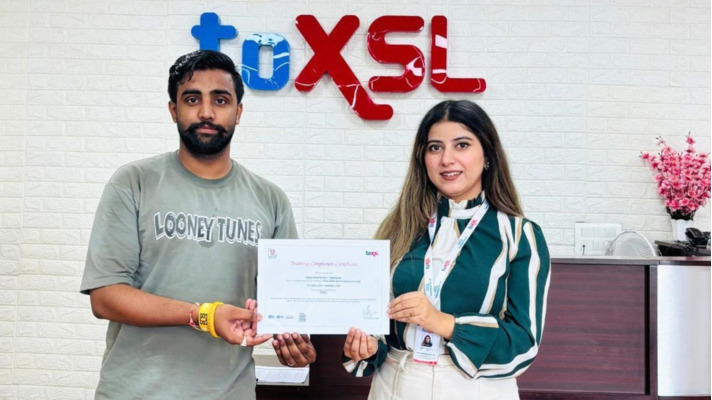
At ToXSL Technologies, we are delighted to congratulate our talented trainee on successfully completing 3 months of Flutter Development Industria...

The mobile app industry is evolving rapidly, creating exciting opportunities for students and aspiring developers who want to build a career in technology. Businesses across industries are investing in mobile applications to improve customer engagement, simplify operations, and deliver digital se...
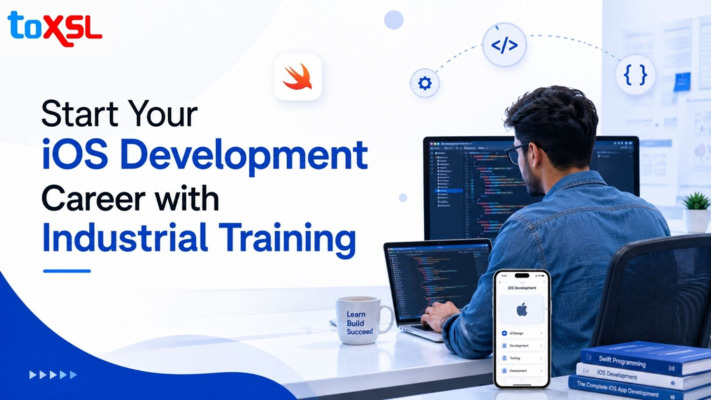
The demand for skilled mobile app developers continues to grow as businesses increasingly depend on mobile applications to engage customers, streamline operations, and deliver digital services. iOS development is a particularly valuable career path for students interested in building applications...